Non-Insulated Pin Terminals About
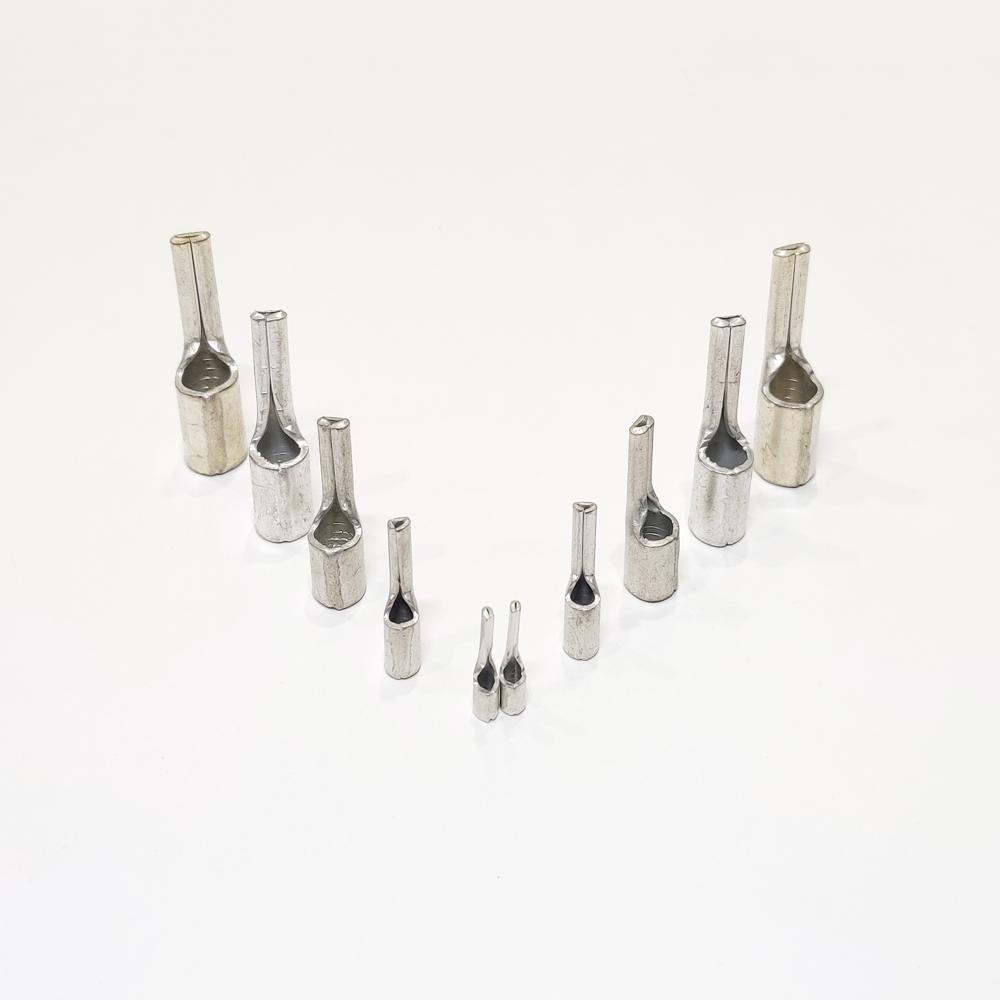
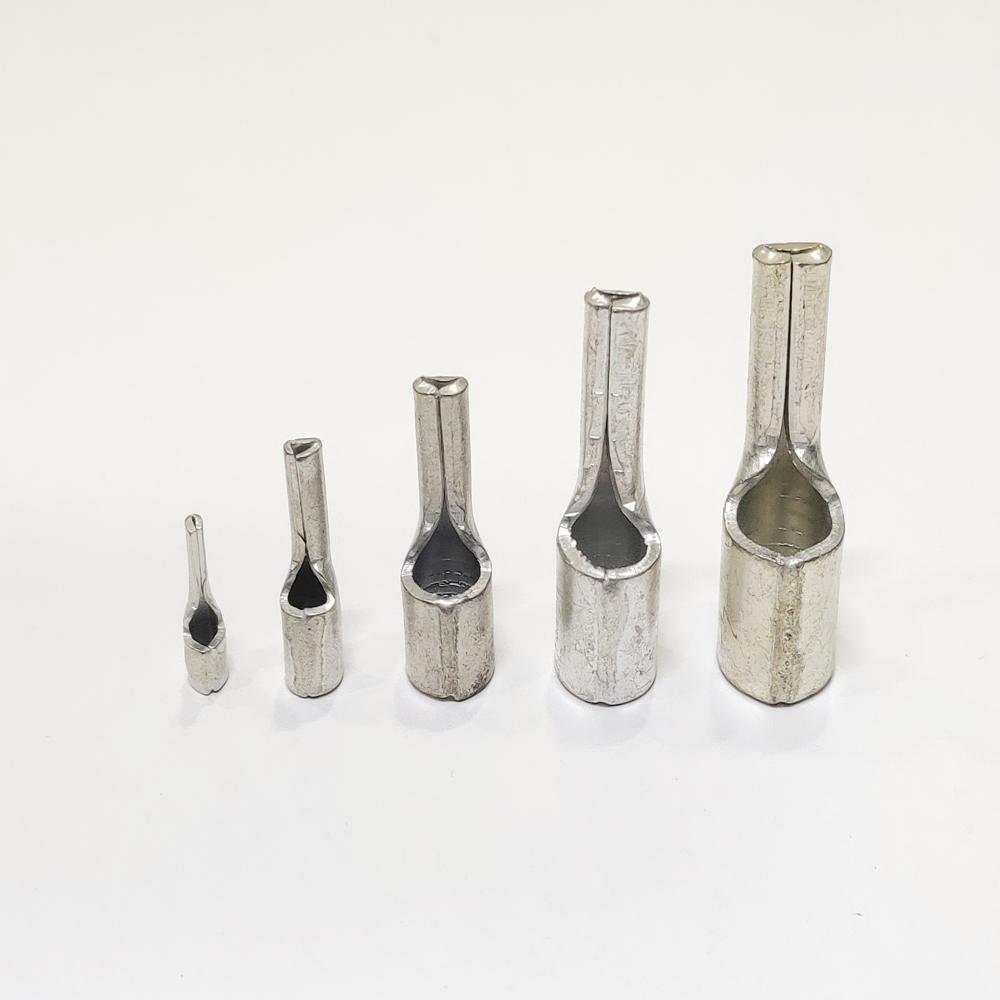
Pin Type Copper Terminal Lugs are precision-engineered electrical connectors designed for reliable cable termination in terminal blocks, circuit breakers, control panels, and other electrical equipment. Manufactured from high-conductivity electrolytic copper and finished with high-quality electro tin plating, these terminal lugs provide excellent electrical conductivity, low contact resistance, and superior protection against corrosion.
The pin-type design ensures easy insertion into terminal blocks and compact electrical connections where ring or fork terminals are not suitable. These lugs are designed for efficient crimping, offering a strong mechanical grip and a secure, vibration-resistant connection. Their robust construction ensures dependable performance in industrial, commercial, and utility electrical systems.
Available in a wide range of cable sizes, pin diameters, and barrel lengths, Pin Type Copper Terminal Lugs are suitable for low, medium, and high-current applications. Custom dimensions, markings, and OEM manufacturing services are also available to meet specific customer requirements.
Features:
- Manufactured from high-conductivity electrolytic copper
- Electro tin plated for enhanced corrosion resistance
- Low electrical resistance for efficient current transfer
- Precision pin design for secure terminal block connections
- Strong crimp barrel for reliable cable termination
- High mechanical strength and long service life
- Vibration-resistant electrical connection
- Easy installation with standard crimping tools
- Available in multiple cable sizes and pin dimensions
- OEM customization and private labeling available
Reliable Connection in Demanding ApplicationsDesigned for high mechanical strength and lasting connections, these non-insulated pin terminals excel in demanding applications like control panels, switchgear, and junction boxes. Their robust tin-plated copper construction ensures durable, corrosion-resistant performance indoors, while a range of wire accommodation from 0.5 mm2 up to 10 mm2 adds versatility across installation needs.
Quick Installation for Maximum EfficiencySave time and reduce errors with easy crimp installation. Whether for single projects or volume assembly, these terminals support straightforward crimping via pliers or dedicated crimping tools. The pin-type design allows for reliable insertion into terminal blocks or direct screw connections, streamlining panel wiring jobs.
FAQ's of Non-Insulated Pin Terminals:
Q: How are non-insulated pin terminals installed?
A: Non-insulated pin terminals are installed by crimping them onto stripped wire ends using crimping pliers or a crimping tool. Once secured, the pin is directly inserted into a terminal block or fixed under a screw connection for a safe and stable electrical connection.
Q: What environments are suitable for using these terminals?
A: These pin terminals are designed for use in indoor or protected environments. They provide reliable performance in control panels, switchgear, and junction boxes, where exposure to harsh outdoor conditions is minimal.
Q: What types of conductors can be used with these pin terminals?
A: Both solid and stranded copper wires can be used with these terminals, provided the conductor size ranges from 0.5 mm2 to 10 mm2, making them versatile for various wiring configurations.
Q: When should I use non-insulated pin terminals instead of insulated ones?
A: Non-insulated pin terminals are ideal when insulation is managed elsewhere in the system or when space constraints make uninsulated connectors preferable. They offer a compact solution and are suitable for environments where additional insulation is not required.
Q: What are the benefits of using tin-plated, non-insulated pin terminals?
A: Tin plating on copper enhances corrosion resistance, ensuring long-term electrical performance and mechanical strength. They are also RoHS compliant, overseeing environmental considerations in manufacturing and waste management.
Q: Are these pin terminals flame retardant or sealed?
A: No, these terminals are not flame retardant or sealed. They are recommended for protected, non-exposed environments where flame resistance is not a specific regulatory or operational requirement.
Q: Where are these terminals most commonly used?
A: They are widely used in electrical installations such as control panels, switchgear, and junction boxes, supporting reliable wire termination within these assemblies.

 Send Inquiry




 Send Inquiry


 Send Inquiry
